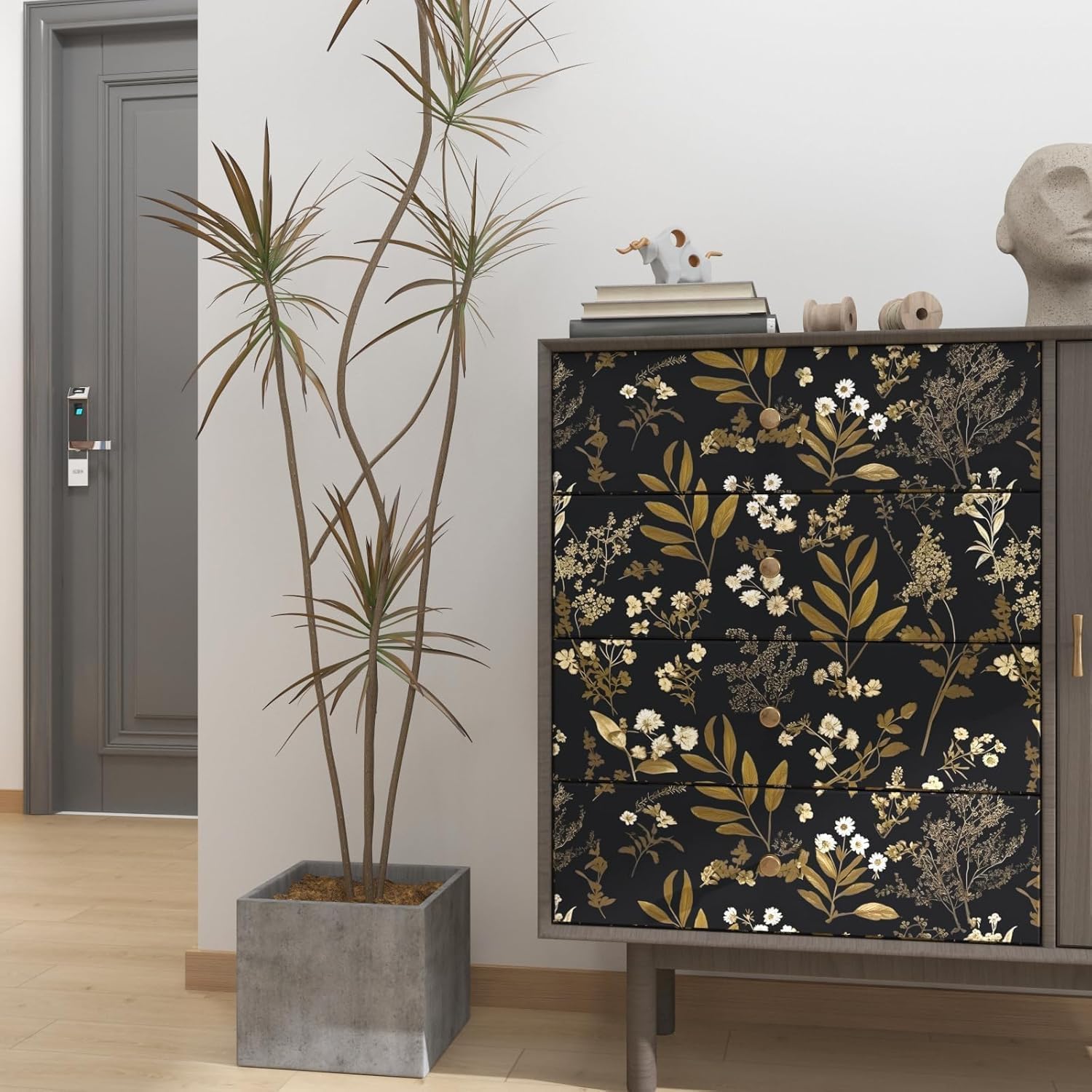
You’ve got a lease ending in twelve months, a bland beige accent wall that’s making you miserable, and a security deposit you absolutely cannot forfeit. Peel-and-stick wallpaper — a self-adhesive wallcovering that presses directly onto your painted wall and, ideally, peels away cleanly when you move out — sounds like the perfect answer. And for vintage floral and boho prints specifically, the market in 2026 has genuinely matured: the bleeding, blurry botanical prints of five years ago have been replaced by sharper, more saturated designs with better adhesive systems. But “peel-and-stick” is not a single standard. The term covers products ranging from thin, vinyl-coated paper with mediocre glue all the way up to thick, fabric-backed non-woven panels with repositionable pressure-sensitive adhesive. The difference matters enormously when you’re choosing between a moody William Morris–adjacent print at $18 a roll and a Tempaper botanical panel at $48 — and when your landlord is doing a walkthrough in twelve months.
This guide is built for renters who have already done one wallpaper project or are mid-decision on their second. You know what a repeat match is (the distance between identical points in the pattern, which determines how much you waste aligning panels), you’ve probably seen the word “repositionable” on packaging, and you’re ready to pressure-test the claims. We’re going to walk through roll yield math, the real removability spectrum, and which vintage floral print tiers are actually worth the money.
| EDITOR'S PICKLaatse Vintage Wallpaper Peel a… | Mid-tierRoman’s E-Z Hang Peel & Stick W… | Budget picktiptopcarbon Wallpaper Kit Wall… | |
|---|---|---|---|
| Roll size | 17.5" × 393" | — | — |
| Pattern | Vintage floral | — | — |
| Waterproof | ✓ | — | — |
| Material | Vinyl | — | — |
| Adhesion type | Peel and stick | Peel & stick | — |
| Price | $38.99 | $12.49 | $5.98 |
| See on Amazon → | See on Amazon → | See on Amazon → |
Roll Yield: The Math Nobody Does Until It’s Too Late
The single most common renter mistake — confirmed by pattern after pattern in Apartment Therapy’s 2025 renter retrospective — is buying to coverage, not to pattern repeat. Here’s the problem: a vintage floral or boho print almost always carries a drop match (also called an offset match), meaning every other strip drops by half the repeat length before the pattern aligns. A straight match lines up horizontally across panels; a drop match does not, which costs you extra material every time you start a new strip.
By the numbers — a 100 sq ft accent wall (10 ft wide × 10 ft tall):
| Repeat type | Usable strips per roll (20.5” wide × 18 ft) | Rolls needed |
|---|---|---|
| No repeat / solid | ~5.8 strips | 2 rolls |
| 12” straight match | ~4.9 strips | 3 rolls |
| 24” drop match | ~3.8 strips | 4 rolls |
That 24” drop match — which is typical for large-scale vintage botanicals from brands like RoomMates’ licensed collections or Tempaper’s Garden Party line — effectively inflates your cost by 30–40% before you’ve hung a single panel. If a roll retails at $32 and you budgeted for two rolls, you’re actually buying four. Always pull the pattern repeat from the product spec sheet before adding to cart, and then add one additional roll as a buffer. Returning an unopened roll is easy; running short mid-wall is not.
The Wallcovering Association’s standard terminology document distinguishes between “usable yield” (what you can actually hang) and “gross coverage” (the number printed on the label). Most peel-and-stick products quote gross coverage. For a 24” drop match print, assume usable yield is roughly 65–70% of the label number.
This Old House’s installation guide recommends cutting all your strips dry before peeling a single backing — this is especially critical for drop-match florals where a miscalculation on strip three ruins your alignment for every strip after it.
Removability: What the Claims Actually Mean
Every peel-and-stick product says “removable.” That word does almost no work on its own. The meaningful questions are: removable from what surface, after how long, and at what temperature?
The three-tier removability reality, based on aggregated owner reports from Houzz installation threads (2024–2025) and Apartment Therapy’s renter retrospective:
Tier 1 — Truly repositionable, low-risk. Products with a non-woven (fabric-like, tearproof) backer and a pressure-sensitive adhesive that does not cure over time. These peel cleanly from standard latex-painted drywall up to 24 months in most owner reports. Tempaper’s core line and RoomMates’ newer non-woven substrates fall here. The non-woven substrate (think of it as a mat of interlocked synthetic fibers, similar in feel to a dryer sheet but structural) is the key: it doesn’t absorb moisture or stretch unevenly the way paper-backed products do, so it comes off in long, intact strips rather than tearing into shreds.
Tier 2 — Removable with effort and conditions. Thinner vinyl-coated paper products, typically in the $12–$22/roll range. These work on fresh latex paint (cured at least 30 days before application, which is a real condition your apartment walls may not meet), but owner reports consistently flag adhesive residue on walls painted with flat or matte finishes, and tearing on walls that have any texture. House Beautiful’s 2025 roundup specifically notes that popcorn or orange-peel texture walls are a risk factor for any peel-and-stick product regardless of substrate quality.
Tier 3 — Nominally removable, practically risky. Fabric-backed products designed for permanent residential installs but sold with “removable” marketing. Some of Spoonflower’s custom-printed peel-and-stick fabric wallpaper falls into a gray zone here — owners love the print quality but report that removal after 12+ months requires patience, heat application (a hair dryer at low heat to soften the adhesive), and sometimes touch-up paint. That’s manageable, but it’s not what “removable” implies to most renters.
The decision rule: If your apartment walls are painted with flat/matte paint, or if the paint is less than 60 days old, or if there’s any texture, prioritize non-woven backed products even if it raises your per-roll cost. The $12 savings per roll is not worth a $300 deposit deduction.
One technical note worth knowing: some landlords and property managers have begun specifying in lease addenda that any wallcovering installation voids the standard “reasonable wear and tear” clause. If your lease is silent on this, document the wall condition with timestamped photos before installation and after removal — a recommendation that comes up repeatedly in Apartment Therapy’s reader community threads.
Vintage Floral Print Tiers: Where the Money Actually Goes
Not all boho botanicals are created equal, and the quality gap is legible if you know what to look at.
The $12–$22 Range: Pattern Over Performance
At this price point — brands like Threshold (Target’s house label), various Amazon private-label collections, and entry-level RoomMates packs — you’re getting serviceable ink saturation on patterns with repeats under 12 inches. The vintage aesthetic often leans desaturated and muted, which works well for smaller repeats because the eye forgives minor misalignment in low-contrast prints.
The tradeoff: substrate is almost always a thin vinyl-paper laminate. It installs cleanly on good walls but owners consistently report it stretches during application, making drop-match alignment on large florals genuinely frustrating. If you’re doing a small area (a single door-width accent or a powder room), this tier is fine. For a full accent wall with a 24” botanical repeat, the alignment frustration cost is real.
The $28–$48 Range: The Sweet Spot for Renters
This is where non-woven substrates become standard and print quality takes a measurable step up. Tempaper’s Garden Party and Hawthorne collections, RoomMates’ Designer Series, and Chasing Paper’s botanical prints all live here. The non-woven backer means you can peel, reposition, and re-stick during installation — critical for a 24” drop match where your first attempt rarely lands perfectly.
Print quality at this tier typically uses digital printing at higher DPI, which matters for vintage florals: the aged, slightly washed look of a good William Morris–inspired print requires subtle ink gradients that cheap printing flattens into muddy blobs. House Beautiful’s 2025 roundup called out Tempaper’s Isabelle print specifically for nailing the “faded textile” quality that makes a boho floral feel genuinely vintage rather than costume-y.
Across aggregated Houzz reviews, owners at this tier report clean removal at the 12-month mark in the vast majority of cases — with the caveat that wall surface condition remains the primary variable, not the product itself.
The $55–$90+ Range: Statement Prints and Custom Scale
At the top of the peel-and-stick market — Spoonflower custom prints, Photowall’s peel-and-stick mural panels, and Chasing Paper’s Artist Series — you’re paying for two things: scale and exclusivity. Large-scale vintage botanical murals (a single unfurling peony rendered at 48” across, for instance) cannot be achieved at smaller repeat sizes; the print has to be big to read correctly.
Spoonflower is worth a separate mention because its model is genuinely different: you’re ordering a custom-printed fabric-backed wallpaper in a design from an independent artist, which means the print is unique and the scale can be specified. The tradeoff, as noted above, is that fabric-backed substrates demand more care at removal. For renters in longer leases (24+ months) who want a truly elevated aesthetic, it’s a defensible choice if you budget time and a heat gun for removal day.
The Decision Matrix
If you’re mid-decision right now, here’s how to frame it:
If your wall is textured or painted with matte/flat paint: Go non-woven backer at the $28–$48 tier minimum, and test a corner with a 12” sample before committing to four rolls.
If you’re doing a large-scale vintage floral with a 24” drop match: Add 35–40% to your calculated roll count. Budget for one extra roll. Do not buy to the label coverage number.
If your lease is under 18 months: Stick to Tier 2 ($28–$48) non-woven products. The removal reliability at that timeline is well-documented. Spoonflower fabric-backed prints are better suited to 24+ month installs.
If print quality is the priority and you’re willing to manage removal carefully: Spoonflower or Photowall at the premium tier gives you designs that genuinely can’t be matched at lower price points. Just document everything, test your paint adhesion first, and plan on a hair dryer and 45 minutes of patience on move-out day.
The peel-and-stick vintage floral category has matured enough in 2026 that there’s a genuinely good answer at every budget tier. The variable that separates a successful install from a deposit dispute isn’t which brand you chose — it’s whether you matched the substrate type to your actual wall condition and did the repeat math before you hit purchase.