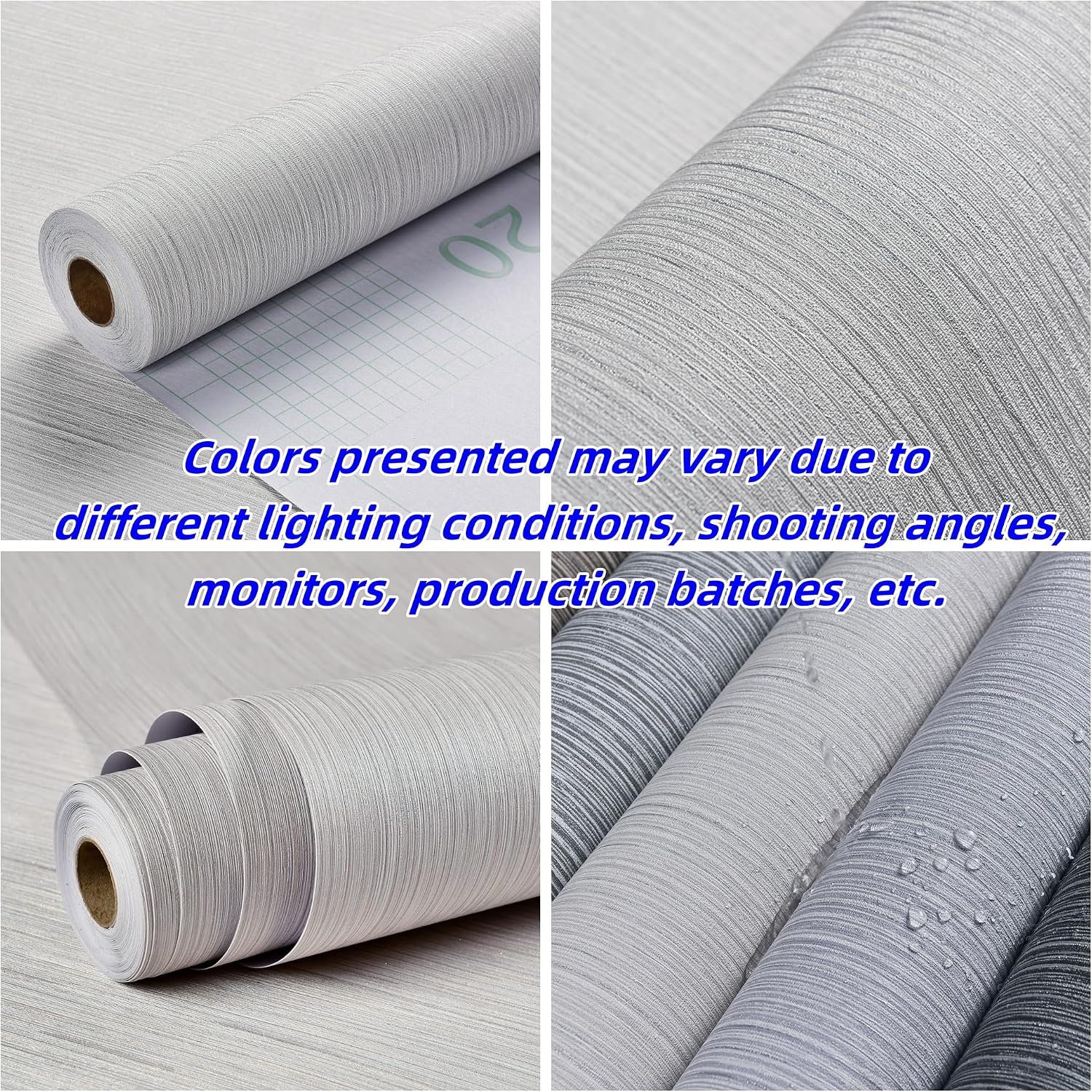
You’ve been eyeing that accent wall — maybe it’s a rental dining room or a client’s primary bedroom — and real grasscloth (a natural woven wallcovering made from plant fibers like jute, seagrass, or bamboo, adhered to a paper backing) is everything you want aesthetically. The problem: real grasscloth is paste-on, permanent, and a nightmare to remove. It also typically runs $8–$20 per square foot installed. Enter faux grasscloth peel-and-stick: vinyl or non-woven wallpaper printed and embossed to mimic that woven texture, backed with a pressure-sensitive adhesive that’s supposed to peel off cleanly when you’re done. It sounds like the perfect workaround. Whether it actually delivers on both promises — convincing texture and clean removal — is what this article is here to sort out.
If you’re mid-spec on a project, evaluating samples, or trying to set realistic client expectations before signing off on an install, this is the tradeoff map you need.
What “Faux Grasscloth” Actually Means (and Why the Category Varies Wildly)
The label “faux grasscloth peel-and-stick” covers a wide spectrum of products that share a marketing concept but differ significantly in how they’re built. Understanding the construction determines almost everything about texture authenticity and removal performance.
Substrate options you’ll encounter:
-
PVC (vinyl) face with adhesive backing. The most common in the mass-market tier. Brands like RoomMates and most Amazon private-label options use this construction. The embossed texture can be sharp and dimensional, but the material is relatively inelastic, making seam alignment less forgiving. Removal tends to go cleanly on newer, well-primed paint — but vinyl’s low breathability means moisture can migrate and compromise adhesion over time.
-
Non-woven face with repositionable adhesive. Used by mid-tier brands including Tempaper and some SKUs from Chasing Paper. Non-woven substrates (a manufactured fabric blend, not a natural weave) behave more like traditional wallpaper, conforming slightly better to minor wall texture. The grasscloth emboss tends to be subtler but more uniform. Removal is generally more predictable because the backing doesn’t stretch as aggressively.
-
Fabric-backed or woven-texture hybrid. A smaller segment. Some specialty SKUs from Spoonflower’s peel-and-stick line, for example, print onto a woven-texture base material rather than embossing. The tactile result is noticeably different — closer to real grasscloth — but the adhesive systems vary, and removal data from owners is thinner because these SKUs turn over faster.
The Wallcovering Association’s Commercial Wallcovering Standards and Performance Testing Guide (which governs Type I, II, and III ratings for traditional wallcovering) does not formally rate pressure-sensitive removable products by the same criteria. That gap matters: when a brand says “removable,” they’re using their own definition, not a regulated standard.
The Texture Gap: How Close Does It Actually Get?
Here’s the honest answer based on aggregated owner reporting and published spec comparisons: convincing from across the room, less convincing up close, and tactilely detectable in almost every case.
Real grasscloth has irregular, hand-woven variation — slight shifts in color, raised fiber crossings, visible texture depth that changes with raking light. The embossing on faux peel-and-stick is, by definition, a repeated pattern stamped into a uniform substrate. Even the best executions repeat on a tile. As Architectural Digest has noted in coverage of grasscloth alternatives, the key tell is “the regularity of the pattern repeat, which real grasscloth simply doesn’t have.”
That said, the category has improved meaningfully. Owners reviewing Tempaper’s grasscloth-texture SKUs on Houzz and aggregated retail platforms consistently describe the visual effect as “better than expected” at normal viewing distances — the issue is that the emboss is shallower than it photographs and the sheen on vinyl-face products can read as slightly plastic under certain lighting. House Beautiful’s roundup of grasscloth wallpaper alternatives specifically flags matte-finish products as performing better visually than gloss-coated vinyl options in the same category.
Variables that close — or widen — the texture gap:
| Factor | Helps Realism | Hurts Realism |
|---|---|---|
| Lighting | Indirect/diffuse | Direct raking light (exposes pattern repeat) |
| Wall surface | Smooth drywall | Existing texture (fights the emboss) |
| Finish level | Matte face | Gloss or semi-gloss coating |
| Seam handling | Butted tight, pattern-matched | Visible gap or overlap |
The seam issue is worth dwelling on. Real grasscloth is famously seam-visible — the natural variation means seams blend in. Faux peel-and-stick seams are more conspicuous because the pattern on either side of the seam is mechanically identical, so any slight misalignment reads immediately. This Old House’s installation guidance on peel-and-stick wallpaper specifically calls out seam management as the primary skill variable determining whether a finished wall looks professional or amateur.
The Removability Claims: What Holds Up and What Doesn’t
This is where the category gets genuinely complicated, and where the gap between marketing language and real-world owner experience is most pronounced.
What manufacturers claim: “Damage-free removal,” “repositionable,” “leaves no residue,” “safe for painted walls.” These phrases appear across RoomMates, Tempaper, Chasing Paper, and most private-label products.
What aggregated owner experience shows: Apartment Therapy’s reporting on renter peel-and-stick removal experiences found that clean removal is heavily conditional on factors manufacturers rarely specify in their primary claims:
-
Paint age and cure time. Fresh paint (under 30 days) is at much higher risk of pulling. The adhesive can bond more aggressively to uncured latex than to fully hardened paint. Most removal problems in owner reviews trace back to paint that was newer than the manufacturer’s fine-print recommendation.
-
Paint sheen. Flat and matte finishes offer less adhesive resistance than eggshell or satin. Removal from flat-painted walls generates the highest rate of complaints about surface damage in aggregated reviews.
-
Temperature and dwell time. Products left on walls for 18–24+ months show measurably more adhesive transfer than those removed within 12 months. Several Tempaper product reviews on aggregated retail platforms note that strips applied in summer, in rooms without climate control, showed adhesive residue on removal that required Goo Gone or mineral spirits to clear — not damage-free.
-
Wall substrate. Plaster walls, skim-coated surfaces, and walls with layers of old paint behave differently than modern drywall with a single latex topcoat. The “damage-free” claim is implicitly written for the latter.
By the numbers:
- Tempaper’s published guidance recommends waiting 28 days after painting before application
- RoomMates specifies a 70°F–80°F ambient temperature range for optimal removal
- Chasing Paper’s FAQ notes removal is easiest when done slowly at a 45-degree angle and may require a hair dryer to warm adhesive in cold conditions
- Owner reviews citing wall damage on Houzz and retail platforms skew heavily toward installs exceeding 18 months
The practical takeaway: the removability claim is real, but it’s bounded. If you’re speccing this for a rental client who will live with it for 2+ years and has flat-finish walls, you should be having a frank conversation about primer-and-paint costs as a contingency budget line.
The Decision Framework: If X, Then Y
By this point you have enough data to make a clean call. Here’s how to think through the decision based on your specific scenario:
If the wall is freshly painted (under 4 weeks) → Do not install yet. Wait the full cure period. If the project timeline doesn’t allow it, budget for a primer coat (Benjamin Moore Fresh Start or equivalent peel-and-stick primer is sometimes recommended by installers on trade forums) rather than going directly to paint.
If the wall has flat or matte finish → Either repaint the accent wall in eggshell before install, or set client expectations explicitly that removal carries risk and factor a one-wall repaint (~$150–$300 labor + materials) into the contingency.
If the project has a 24+ month timeline → Faux peel-and-stick is still viable, but the damage-free claim weakens. Plan for adhesive residue cleanup and budget accordingly. For commercial installs or longer-term residential projects, evaluate whether a traditional paste-on non-woven product is actually more practical — modern non-woven wallpapers strip reliably in single sheets and may be less risky than adhesive transfer from a long-dwell peel-and-stick.
If texture authenticity is the primary brief → Set the expectation that peel-and-stick will read well at social-media distance (4+ feet, photographed) but will not pass tactile inspection. For clients who will live with a wall daily and care about material authenticity, a paste-on grasscloth-texture product from Phillip Jeffries, Arte, or Elitis — or even a mid-range non-woven grasscloth print from Milton & King — will hold up better to long-term scrutiny.
If the brief is a renter accent wall, smooth walls, eggshell or satin paint, sub-18 months → This is the sweet spot the category was designed for. Tempaper’s grasscloth SKUs and Chasing Paper’s woven-texture line are reasonable choices at $15–$40 per roll, with strong aggregated owner satisfaction in exactly this scenario. The visual result won’t fool a designer, but it will deliver a genuinely elevated room.
If budget allows mid-tier commitment → Spoonflower’s peel-and-stick custom prints on their woven-texture substrate are worth sampling before committing. The customization angle is meaningful for design clients who want a unique colorway, and the woven base adds tactile legitimacy that straight-embossed vinyl can’t match. Pricing runs higher per roll, but for a single accent wall the delta is often manageable.
The Bottom Line
Faux grasscloth peel-and-stick occupies a genuine and useful niche — it’s not a scam and it’s not a perfect substitute. The texture is convincing enough for most rooms when conditions are right. The removability claim is real but contingent, and the conditions that make it fail (old flat paint, long dwell times, temperature swings) are common enough that you should always address them proactively rather than treat removal as guaranteed.
Your job as the practitioner in the room is to close the gap between the marketing claim and the real-world condition. Assess the wall, set the timeline, and have the contingency conversation upfront — that’s what separates a satisfied client from a damage dispute six months after move-out.